
Food trends are a funny phenomenon. While some trends seem spectacularly silly in retrospect (hello, bone broth and paleo diets!), other trends, like organic food, morph into staples of our culinary conversation and help us connect to the food world at large. Food trends can fundamentally change the way we eat. I couldn’t buy coconut and corn flour at the supermarket if gluten-free foods hadn’t been one of the top food trends of recent years. Unfortunately, food trends are not tied to taste. I’ve suffered through the proliferation of overpriced, dry cupcakes and Cronut wannabes simply because they were well, trendy.
Pastry Trends That Need to Die
Cupcakes. Too much icing on too little cake. Enough said.
Macarons. I have nothing against the macaron. It’s elegant, tasty, and pretty. What I have against the macaron is that it’s everywhere. The garish colors and artificial flavors that contributed to the macaron’s popularity have ultimately made them boring and uninspiring. (And it’s macarOn, not to be confused with its sibling, macarOOn, a cake-like confection of almond paste and coconut.)
Dessert Mash-Ups. Dominique Ansel’s cronut is an undeniable success and a global phenomenon. But not every dessert or pastry needs to be mashed up in order to be good. I can’t say that I tasted heaven in a scuffin (scone and muffin), a doughka (a babka made from doughnut dough) or a townie (a tart and a brownie) and still, people persist. These mash-ups get media coverage, not because they are delicious, but because they are a novelty. They’re the culinary version of a magician’s cheap trick.
Savory Desserts. There’s a disturbing trend among (pastry) chefs who equate innovation with inserting a random savory ingredient into a dessert. In their attempt to stand out from the culinary fray, they’re screaming, ‘Hey, look at me! I’m avant-garde! I’m a rebel!” But chocolate, celery, and tarragon? No thanks.
Gluten-Free. Like nut allergies, the gluten-free trend has become a fad. Adherents of a gluten-free diet claim that it helps them lose weight, improves concentration, and speeds up metabolism or any number of medical myths. But then, they down a beer with their burger or order doughnuts for dessert.
…Pastry Trends I’d Like to See More of in 2016
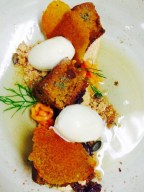
Savory-Inspired Desserts. There’s a distinct difference between throwing a savory ingredient into a dessert and being inspired by the savory side of the kitchen. When I worked on garde manger, I learned to use the acidity of vinaigrettes, gastriques, and pickles to accentuate and balance the flavors of food. Much as acid and salt are used to heighten flavors in savory cooking, I drew on these same lessons to heighten flavors and tone down sweetness in desserts. Composing a salad became not much different from composing a dessert. Food is food, not as sweet or savory ingredients, but as a collection of flavors.

Pickled Fruit. Pickling has historically been used to preserve vegetables past their harvest and it shouldn’t be any different in the pastry kitchen where fruit seasons are notoriously short. When pickled with spices and fruit vinegars, the flavor of fruit takes on new dimensions. Cherries pickled with cinnamon and bay leaves, once tart and sprightly, become warm and woodsy. Pickling papaya with star anise and champagne vinegar enhances floral notes of this tropical fruit. Pickling also adds weeks to the notoriously fragile shelf life of fruit. Pickled fruit can be served over ice cream, with cookies, or as an accompaniment to the cheese plate.
Sweeteners. There’s more than one way to sweeten a dessert: maple syrup, jaggery, palm sugar, demerara, muscovado. They’re all variations of sugar, each with a unique flavor profile. In desserts like pecan pie, cane sugar makes for an insipidly sweet pie whereas muscovado adds a depth of flavor that makes you want to take a bite, and then another bite, and then another bite.
Unconventional Flours. The upside of the gluten-free trend is that one no longer has to trek to the outer boroughs of Hipsterville to buy an overpriced five pound bag of buckwheat flour.
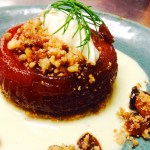
As companies like Bob’s Red Mill, King Arthur, and Arrowhead Mills expand their milling operations, a quick trip to the supermarket provides more alternative flours than one knows what to do with. Nowadays, one can stroll down the baking or gluten-free aisles of Stop and Shop and find coconut, buckwheat, amaranth and millet flours. One of my favorite cookbooks this year is Alice Medrich’s “Flavor Flours”, and not because the recipes are gluten-free but because they move beyond flour as a generic ingredient and treat flour as a flavor in and of itself.
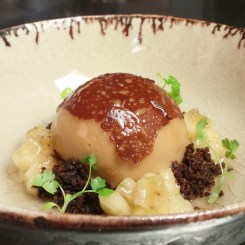
Bitter Flavors. The bitter of caramel cooked too long, the bitter of milk turning rancid, the bitter of poison. Bitter is not a desirable trait in food and it can be downright scary in desserts where the expectation is “sweet, sweet, and MORE sweet!!” But embracing bitter tastes in desserts is not as scary as one would think. Think of coffee and chocolate, two of the most popular dessert flavors and in their purest forms, they are two of the bitterest flavors in the culinary world. Matcha, the powdered green tea used in the traditional Japanese tea ceremony has a strong, grassy flavor that may be an acquired taste for some but it’s a bitter flavor that refreshes, as does grapefruit. Bitter balances sweetness, and without it, food lacks depth and complexity.
Bolder Chocolate. When a dessert is billed as chocolate, I want to taste the chocolate upfront. Much as wine and single origin coffees showcase how land and climate affect a crop’s flavor, the notion of chocolate having terroir is gaining a foothold as connoisseurs are learn that chocolate from Trinidad, Africa, and Venezuela all have unique flavor profiles that chefs can use to their advantage in creating distinctive desserts.
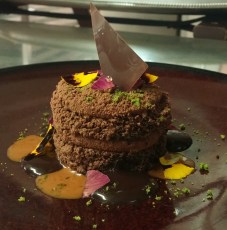

Heirloom Fruits. Every year, we run through the same ponderous cycle of seasonal ingredients: strawberries in spring, berries and peaches in summer, apples and pears in fall, citrus and tropical fruit in winter. One way to break said monotony is to use an heirloom variety of fruit. Heirloom fruit fell out of favor with modern agriculture because they have short harvest seasons, are susceptible to disease, and cannot suffer the rigors of mechanical harvesting and long-distance shipping. But what they lack in vigor and hardiness, they often make up for in flavor. You will need to buy directly from a farm or join a local CSA in order to find such fruit but the trip is worth the effort.

Funky Fats. Having trained in classical French pastry, I am an unapologetic lover of butter. But this is no reason to leave other fats unexplored. Historically, olive oil and animal fats such as lard, suet, and duck fat were more commonly used in most of the world than butter and it’s time to bring them back. I’m a particular fan of duck fat-its subtle sweet, salty, fragrant meatiness blends delightfully with fruit and vanilla and lends an unusual depth to caramel confections. Lard has little pork flavor but its high smoke point makes it a great fat for frying and its large crystalline structure lends an exceptional flakiness in many pastries. Of all the animal fats, suet possesses the highest melting point. Its taste is blander than that of lard but combining it with butter gives crusts a flaky, crisp texture that holds up well to wet pie fillings.
There are many directions that we can take in pastry. All it takes is a willingness to explore and experiment. What other pastry trends would you like to see flourish during the upcoming year?
 Buttery. Salted. Caramel.
Leave a comment