

The Caribbean is not a cheese-centric culture so for much of my life, cheese existed in two forms: orange and white Cheddar. It wasn’t until I embarked upon my journey as a pastry chef (and by default, was in charge of the cheese program) that I began my cheese education in earnest. I already knew that I didn’t like the gamey, barnyard nuance of goat cheese (smelled like unwashed armpit), that I despised the piquant moldy flavors of blue cheese (salty, rotten milk and mold, yum), and sheep’s milk cheese…wait, sheep make milk?! The learning curve was going to be steep. And so I began to climb the curve and learn by tasting.
My first lesson in cheese culture is that the flavor of a cheese hinges on many factors, least of all is which animal made the milk. What grass or grains did the animal eat? Which yeast, mold, or bacterial culture inoculated the milk? Where was the cheese ripened? How long was the cheese ripened? Was the cheese ripened in cloth, pressed with walnut leaves, washed in salt or sealed in wax? One bite of Cabot Clothbound was enough to convince me that cheese, like wine, can express terroir. I swear I can taste the nutty mustiness of a damp cave in every bite.
My second lesson in cheese culture is the importance of aging and ripening cheese, also known in some elitist circles as affinage. Whether you believe that cheese needs to be spritzed, flipped, and pampered with muslin or wrapped in paper and stored in a dank basement, few can argue that aging cheese develops flavor and texture. From the early days of nomadic societies when milk was stored in animal stomachs to survive the long journeys between camps to today’s industrialized methods of controlled atmospheres where ripening cheese has become an exercise in the art of controlled spoilage. With the advent of modern refrigeration, packaging and transportation, we no longer need to make cheese in order to preserve milk. Today we age cheese more for epicurean pleasure and less for preservation.
When you think about cheese as one form of preserved milk, it’s not hard to extend its use into dessert territory. Clotted cream, condensed milk, yogurt—these are all forms of preserved milk. Because cheese is loaded with salt and umami flavor notes that hit the crave-worthy combination of sweet and salt, cheese can also satisfy in desserts. It holds its own against a palette of creamy textures and fruity flavors while its salty pungency foils intensely sweet tastes.
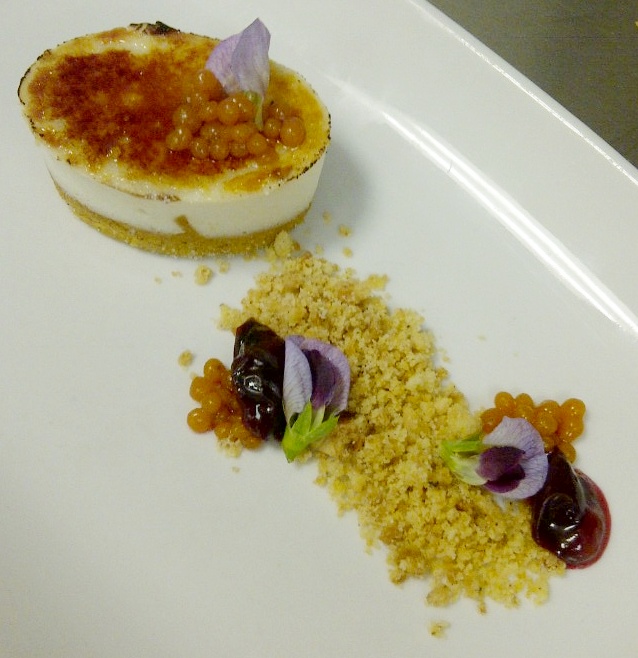
Cheesecake with berry compote is a classic example of this synergy and will serve as a perfect template for creating a collection of fruit-and-cheese-inspired desserts. I’m going to avoid using the traditional dessert cheeses of cow’s milk-ricotta, mascarpone, and cream cheese. (Too easy. We know this will work.) Instead, I will focus on cheeses that are minimally aged, delicately flavored and pair them with rhubarb, stone fruit, berries, grapes, pears, quince and apples. The challenge will be to tone down the salty, umami notes without using a shit-ton of heavy cream and sugar. Whether any of these fruit-and-cheese-dessert concoctions make it onto my dessert menu is beside the point. Cheese is just another food that I’m learning to love and obsess about.
Resources: The Cheese Chronicles (Liz Thorpe) offers a collection of cheese profiles as well as a short primer on the cheese course, and the culture and aging of cheese. Should your cheesemonger come up short, Murray’s Cheese of New York City ships nationwide.
 Buttery. Salted. Caramel.
Leave a comment