
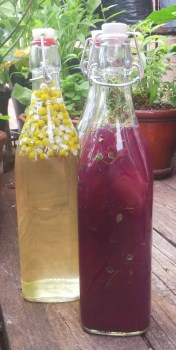
When people think of vinegar, salad dressings and pickles usually spring to mind. Rarely does one think of fruit. But after staring wistfully at the couple hundred apple cores left from Thanksgiving pies, I researched fruit vinegars to use these fruit scraps that would otherwise be resigned to the trash heap. There are many ways to make vinegar but the simplest method is to ferment sugar into alcohol which is then oxidized into vinegar. Fruit, ripe with sugar, quickly ferments into alcohol so exposing it to air often spontaneously results in vinegar, much like wine that was forgotten about for decades or more. And like wine, fruit vinegars can preserve the aroma and flavor of fruit well past their harvest months. Peach, cherry, pear, raspberry, Concord grape, apple…any fruit is fair game for making vinegar.
‘Vinegar’ is derived from the French vinaigre—vin, wine, and aigre, sour. Perhaps this is how our first vinegars came into being for as any unfortunate winemaker knows, diluted alcohol, when improperly corked or left exposed to air, will be colonized by aerobic yeasts and Acetobacter bacteria. These microorganisms metabolize alcohol into acetic acid, the acid that gives vinegar its lip-puckering sour and saliva-inducing tang. Acetobacter thrive on oxygen, so whereas the fermentation of grapes into wine occurs in the absence of oxygen, the process of making vinegar relies on the presence of oxygen.
Fruit (sugar) yeast > Ethanol (alcohol) + Oxygen → Acetic Acid + Water
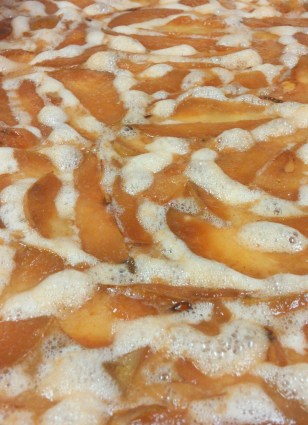
The hardest part of making fruit vinegar is waiting as it takes anywhere from two weeks to two months to produce a flavorful batch of fruit vinegar. First, the fruit ferments in a mild sugar solution. After a week, the mildly alcoholic mash is strained, the liquid is bottled (sometimes with a vinegar starter) and fermentation continues until the alcohol is converted into acetic acid. The finished vinegar is then bottled and sealed. Sealing the vinegar prevents oxygen from continuing the fermentation process as the Acetobacter bacteria will continue to break down the acetic acid into water and carbon dioxide and lower the vinegar’s acidity level. For small batches, one can smell and taste the vinegar to know when this conversion is complete. Otherwise, an inexpensive titration test kit can measure the acidity which should range between 2% and 5%. An acidity level of 5% is ideal to produce a shelf-stable vinegar. An acidity level below 2% allows undesirable organisms to take over and spoil the vinegar. {And yes, vinegar can spoil.}
Having experimented with making mead (i.e. fermented honey wine), honey seemed like a natural choice to replace the sugar that’s usually used to kickstart the fermentation. Sugar is so refined that I feared that the fruit would ferment too fast and produce bland, bitter vinegar. On the other hand, the chemicals used to refine sugar could inhibit the fermentation and the fruit could rot before fermentation begins. This is pure conjecture on my part, although when I uncorked my vinegar after six months of aging, I was greeted with the sublime but delicately pronounced aroma of fruit and honey.
Since we want to encourage the living act of fermentation, this recipe calls for raw honey as commercial honey is pasteurized which kills any yeast cells that would encourage fermentation. Raw honey is available at farmers’ markets, food co-ops, and organically-inclined supermarkets like Whole Foods and Trader Joes. Like honey, most commercial vinegars are also pasteurized and for the purpose of fermentation are no longer alive. Fermentation will also be reliable and consistent if the vinegar is started with unpasteurized vinegar, such as Bragg’s, which still contains live cultures of Acetobacter.
____________________
(Honey-Fermented) Fruit Vinegar
Time: two to four weeks, up to six months for aging
2 kg warm water
500 grams raw honey*
40 grams unpasteurized vinegar (optional)
1 kg fruit scraps, preferably organic (concord grape pulp, apple peels, pear cores, rhubarb trimmings)**
Mix water and honey. Place fruit in a wide-mouthed, non-metallic container (stainless steel is OK) and pour enough of the liquid to submerge fruit scraps. Cover the mixture with a few layers of cheesecloth, store in a warm environment (70-90 degrees Fahrenheit) with good air circulation as Acetobacter needs oxygen to function. Keep the fermenting mash away from direct sunlight as Acetobacter are also sensitive to UV light. Be patient. Stir the mixture daily. When bubbles appear, get excited…fermentation has begun!
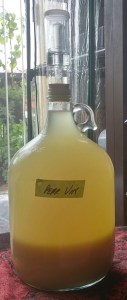
When the bubbling subsides, strain the mixture. The gooey film that appears on the surface, the vinegar ‘mother’, holds the highest concentration of Acetobacter and can be used to start the next batch of vinegar. Bottle the liquid with unpasteurized vinegar in a carboy and discard the fruit solids.
Ferment the liquid for at least two weeks at room temperature. Siphon off the clarified vinegar and age up to six months in a cool spot (68 degrees Fahrenheit). Fruit vinegars are like good wine, improving as they age. Set them aside for a few months. The vinegar can also be infused for a few more weeks with fresh herbs and spices. The vinegar can also be pasteurized for greater stability but I haven’t found this to be necessary if the vinegar is stored in a cool spot and used within a few months. Acidity level should be 5% if you plan to use the vinegar for canning.
*For those who are ethically opposed to eating honey, raw sugar can be substituted although the fermentation will be slow to start.
**Any soft, ripe, or blemished fruit works well so long as it’s not moldy.
_________
I didn’t go into the nitty gritty of the fermentation process as Sandor Katz has covered the topic in excellent detail in his book The Art of Fermentation. Siphons, glass bottles, and carboyls can be purchased from any wine or beer-making business.
Pickled fruit is one way to extend a harvest particularly as winter months approach and pickings are slim. One note of caution though: when using homemade vinegars for this recipe, test the acidity level. It should be 5% otherwise the fruit may spoil.
A shrub is a traditional vinegar-soured fruit drink that was popular in America before carbonated sodas became mainstream. Methods vary but essentially fruit is macerated with vinegar which is then strained and cooked with sugar to make a sweet-and-sour syrup that is later diluted with tonic water to create a fruity and refreshing beverage that I like to use as a palate cleanser during longform tasting menus.
Fruit-Vinegar Sorbet
450 grams fresh fruit
250 grams fruit vinegar
Puree fruit and vinegar. Strain. Add sorbet syrup and bring to 25 Brix. Process in ice cream machine.
 Buttery. Salted. Caramel.
Leave a comment