
Ricotta is underrated in the cheese world—always a supporting actress but never the lead. Cheese connoisseurs wax poetic about the vintage of a Cheddar cheese or the stink of a blue cheese but I’ve never heard people swoon over ricotta (unless they’re debating which ricotta makes the best cannoli filling). This ability to fade into the background makes ricotta the perfect companion in desserts where its creaminess and simple sweet taste creates a blank canvas for flavors to co-mingle and meld. My obsession with incorporating cheese into desserts thus inspired me to make this simple cheese. Although my initial attempts at making ricotta met with paltry curds and oceans of whey, I felt that ricotta was a Mount Everest worth climbing as commercial ricotta tastes so bland and nondescript.
Ricotta: A Tradition
Traditional ricotta, translated as “recooked” in Italian, is made with the whey left over from making Italy’s famed pecorino cheese. (This means that traditional ricotta is technically not a cheese, but a cheese by-product). While most of the milk protein is removed when the cheese is made, the remaining protein can be coagulated into curds if the whey is acidified by fermenting at room temperature for 12 to 24 hours and scalding the whey. The low pH and high temperature denatures the milk protein and causes it to form a fine curd. This is true ricotta—creamy, white, and slightly sweet. Today, ricotta is made from cow’s milk and sadly, many producers use low-grade milk and shorten the fermentation process by acidifying the milk and stabilizing the end product with carrageenan and guar gum.
Ricotta in Desserts
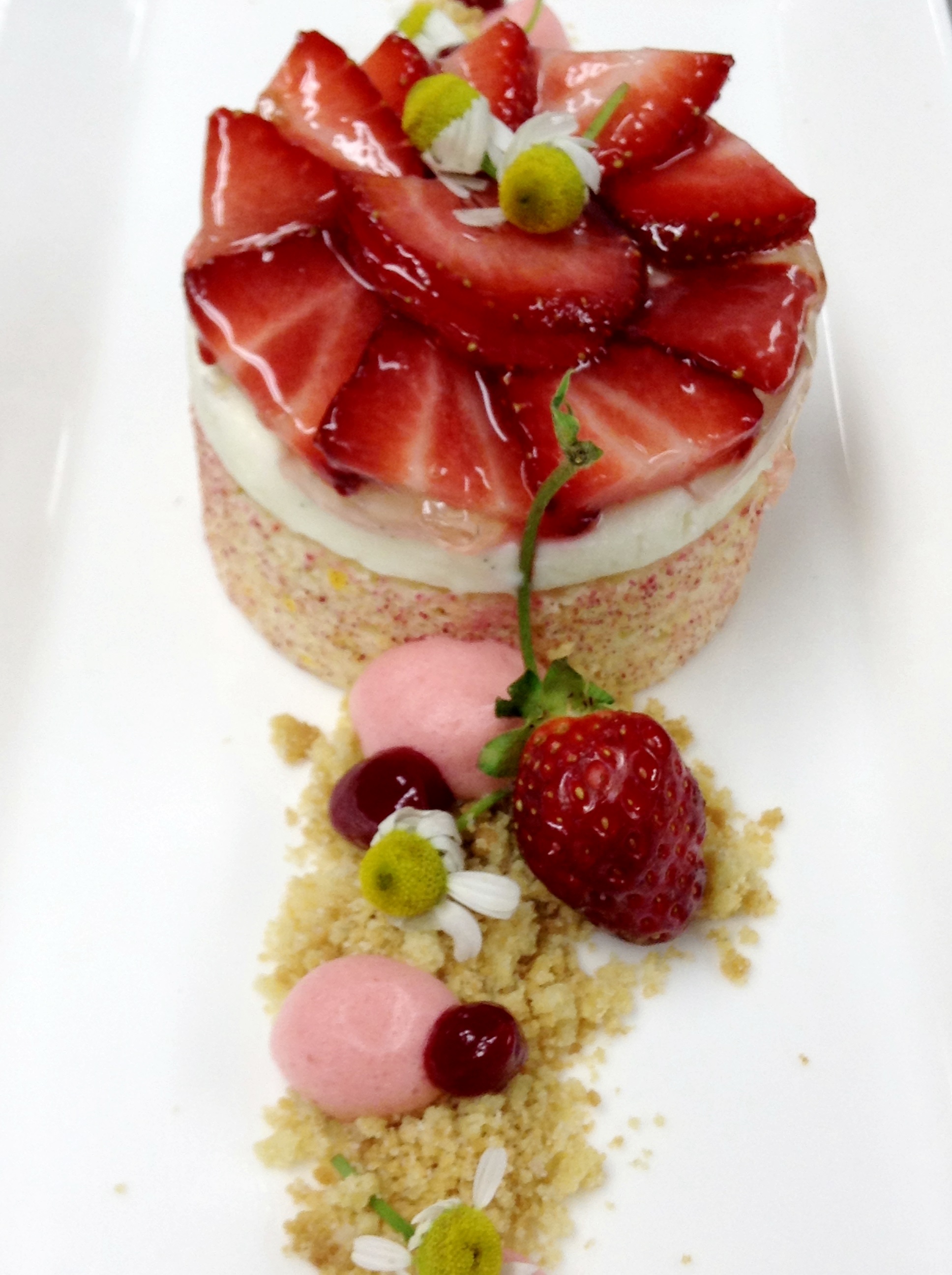
Ricotta cheese offers a cool, creamy counterpoint to berries, honey, lemon, olive oil, and nuts. It can be whipped without setting as firmly as a baked custard and works best in simple desserts—such as whipped ricotta with fresh figs and a drizzle of honey, with slow-roasted stone fruit and lemon verbena sugar, or pressed and molded with candied fruit and Sicilian pistachios. Ricotta can be smoked (affumicata), salted and dried (salata), fermented (forte) and baked (infornata) but when using ricotta in desserts, I opt for impastata made from cow’s milk, or sheep’s milk ricotta. (If your only option for ricotta is store-bought, you should drain it overnight as it tends to retain more liquid than other forms of ricotta cheese.) The relatively low water content of ricotta impastata makes it firm and easy to whip without turning grainy and separating, a boon for the makers of custards, ice creams tarts, and fillings. Cow’s milk ricotta also has a mild neutral taste that agrees with any ingredient. It acts as a flavor carrier, rather than a flavor in itself. Sheep’s milk ricotta tastes rich, with grassy afternotes and a rich mouthfeel, although I find it a bit more watery than its bovine counterpart. As shepherding isn’t popular in the United States, finding fresh sheep’s milk ricotta (that hasn’t spoiled) can be an exercise in diligent persistence that will only pay off if you buy directly from the farm.
Ricotta: The Recipe
Although my recipe for ricotta is a bastardization of the original, it remains true in spirit—the milk is soured then heated to form curds that are drained of whey. Whole milk is used and in lieu of 12 hours of fermentation, the pH is artificially lowered with citric acid so the ricotta can be made in a couple of hours. I also swapped some of the milk with heavy cream to create a firm, spreadable cheese. Many recipes use lemon juice and the results varied as often as the acidity of fresh lemon juice. Once the whey drained, there was always a lingering lemony aftertaste that wasn’t always desired. Ditto for the vinegar. And buttermilk—eh, I couldn’t tell if the ricotta had soured or if it was the buttermilk tang. The only drawback to using citric acid is that it isn’t as readily available as lemon juice. (You can find it wherever candy-making supplies are sold or order online from a baking, cheesemaking, confectionery, or molecular gastronomy website.) Now that I’ve made ricotta, I see the appeal of warm ricotta spread on sourdough focaccia and salumi because that’s how I savored my first taste of ricotta so fresh the curds were still wet with whey. Having discovered this simple pleasure, I will never buy ricotta at home again. And I hope you don’t either. So, here’s the recipe.
I reformulated this ricotta recipe to increase the yield and get a consistent, firm texture. Among the changes:
- The acidity of vinegar varies from brand to brand and so did the consistency of my ricotta. Sometimes, it was watery and sometimes it was dry. I switched to citric acid to get a consistent texture and increase the curdling of the milk without making it taste sour. Citric acid is available from cake and candy supply stores.
- Fresh milk separates upon standing so commercial milks are homogenized to prevent the cream from rising to the top. However, I’ve noticed that such milks also produce watery cheeses so it’s worth the effort to find non-homogenized milk.
RICOTTA
(Yield: 3 quarts of ricotta cheese and 5 quarts of whey)
2 gallons milk, non-homogenized (e.g. Battenkill Creamery)
20 grams salt
10 grams citric acid
120 grams water
Dissolve citric acid in water. Combine milk, cream, salt and citric acid solution in a large, tall-sided pot. Heat to 185 degrees Fahrenheit, stirring often to prevent scorching. A gentle and gradual heating over medium heat with occasional stirring will created the prized, fine textured curd. (In spite of my own recipe, I hardly use a thermometer anymore. I just heat the milk until I bubbles around the edge of the pot and begins to foam.) Turn off the heat and let the milk sit for 15 minutes. Pour the cheese mixture into a colander lined with a damp cheesecloth. Place a large bowl underneath the colander because at least half of the milk will drain off as whey. Keep the ricotta in the colander and continue draining in the refrigerator. This will help the cheese firm up enough to unmold. Chill for 1-3 hours. A longer drain will create a firm ricotta which is the texture that I like to use for desserts and ice creams. If the cheese is a little dry after draining, adjust the consistency by stirring in the some of the whey that drained off. The remaining whey can be caramelized or used to preserve vegetables.
Variation: the milk can be cold infused with herbs or spices before curdling to make flavored ricotta cheeses.
NOTE: I tried making traditional ricotta using whey drained from butter and various cheeses and can surmise why manufacturers have trended towards making ricotta from milk, rather than whey. It’s hard to control the acidity of whey drained from many sources. How long was I supposed to ferment the whey until it was acidic enough? When the whey tasted tangy, I decided that it was acidic enough. Not very scientific. And the output is mangy: four quarts of whey yielded a cup of ricotta. As I have no source for sheep’s milk and no desire (or patience) to make Pecorino cheese, I will stick with the modified recipe that I posted above.
RICOTTA CHEESECAKE
(Yield: 1 10-inch cheesecake or 10 10-inch tarts)
1 ea lemon zest
6 oz. granulated sugar
2 lb. ricotta impastata
6 oz. heavy cream
1 oz. bread flour
6 oz. egg whites
Whisk the lemon zest and granulated sugar to release the oils from the lemon zest. Combine all ingredients except egg whites and blend to form a smooth paste. Whip the egg whites to soft peak and fold into the cheese mixture. Pour into a greased, lined 10 by 3 inch cake pan and bake in a water bath at 300F until light golden brown, about 90 minutes. Cool and chill overnight before unmolding.
NOTES: Do not overwhip the egg whites or the cheesecake will soufflé during baking and crack when cooled. If you are using regular ricotta, swap half with cream cheese to avoid the filling from becoming loose and watery. The filling can also be baked as a tart—pour the filling into a raw tart shell and bake at 325F until the shell is baked and the filling is set.
RICOTTA CREMEUX
(Yield: 1 ½ quarts)
200 grams heavy cream
228 grams granulated sugar
3 sheets gelatin, bloomed
800 grams ricotta impastata
Combine heavy cream and granulated sugar. Heat just until the sugar is dissolved. Squeeze the gelatin sheets dry and add to the warm cream. Stir and strain over the ricotta. Whisk just until the cream is smooth. Chill. Whip until desired consistency.
NOTE: Ricotta impastata or sheep’s milk ricotta works best. Ricotta tends to separate and turn grainy if it’s beaten excessively while warm so chill the cream thoroughly before whipping.
RICOTTA GELATO
(Yield: 6 quarts)
3000 grams whole milk
1050 grams granulated sugar
10 grams stabilizer (optional)
150 grams invert sugar (or honey)
400 grams egg yolks
2000 grams ricotta impastata
300 grams Stega, Faretti, or other Italian liqueur
Combine sugar and whole milk and heat until scalding. Combine invert sugar and egg yolks and temper into scalded milk. If the anglaise does not thicken, heat over low heat stirring constantly until thickened. Pour the anglaise over the ricotta and mix with an immersion blender until smooth. Strain and chill. Process in ice cream freezer.
 Buttery. Salted. Caramel.
Leave a comment