

Fruit seasons can be remarkably short and I am always looking for techniques to preserve fruit to use during the off-seasons. Earlier this year, I wrote about a burgeoning obsession with harnessing the power of fermentation in desserts because under ideal conditions, most foods naturally ferment and the results are digestible and delicious. So much of our most treasured foods wouldn’t be possible without bacterial fermentation—yogurt, sourdough, cheese, bread, and wine. Kimchi, the traditional Korean side dish of spicy, fermented vegetables, appealed to me as a method of fruit preservation because, unlike pickling, the vegetables are not cooked and their natural flavors and textures can be better preserved.
The sour taste of kimchi is created by lactic acid fermentation. Bacteria feed on the sugar in the cabbage and produce lactic acid, a byproduct that both adds flavor and preserves the vegetables. The cabbage is shredded and soaked in salt water, then mixed with a brine that has been thickened with rice flour and seasoned with ginger, garlic, Korean chili powder (a fruiter, less spicy version of chili pepper flakes) and fish sauce. The kimchi is then packed in jars and fermented underground for a few weeks.
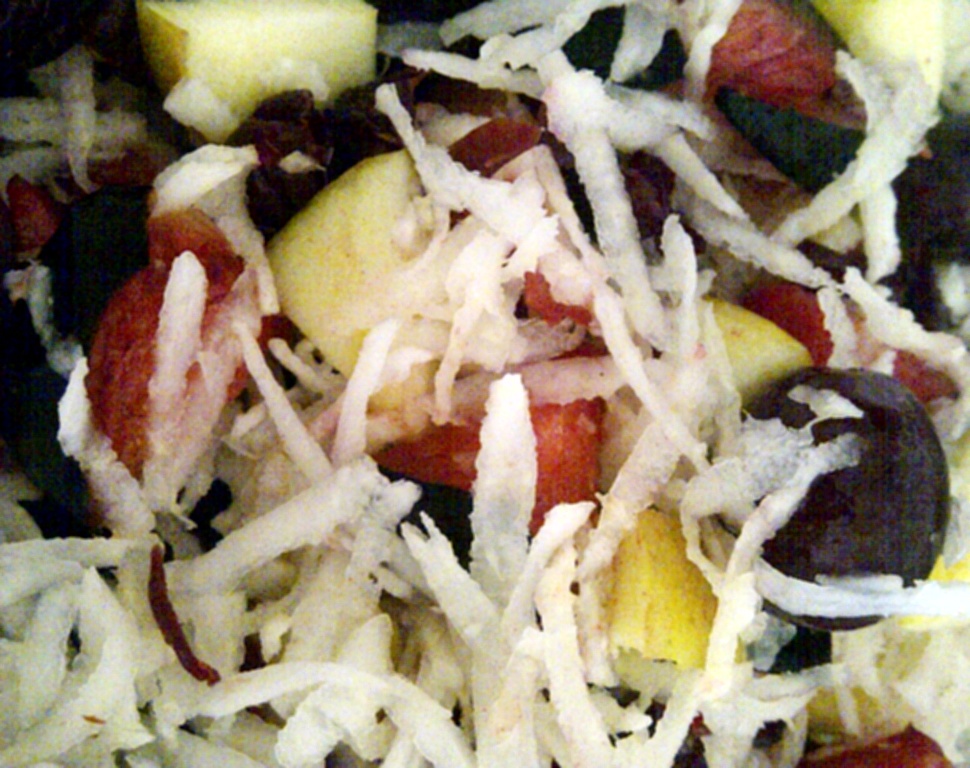
True to the spirit of traditional kimchi, this fruit kimchi uses cabbage and is also seasoned with chili and ginger. The mildly sweet kohlrabi replaces the more pungent napa and red cabbages. Honey adds sweetness and promotes fermentation. Fresh chilis would overwhelm the fruit so I used an oil-based chili paste which also contains salt and garlic and added enough ginger to keep the kimchi spicy. Vinegar aids in preserving the fruit, and in its unpasteurized form, also promotes fermentation.
The thought of leaving cut fruit soaking in liquid at room temperature unnerved me having become well acquainted with the smell and detritus of rotten fruit. As it turns out, my fear was unfounded. The kimchi was strangely addictive. I found myself wanting to eat spoonful after spoonful right from the jar. The garlic, ginger, and chili mellowed considerably and the flavors of the fruit and spices melded beautifully. Because the fruit retained its texture without excessive carbonation, I was able to pair the fruit kimchi with coconut tapioca to create a cool, satisfying, and refreshing dessert.
Fruit Kimchi
1 lb of fruit (plums, pears, grapes, or Asian pears work well but you can use any fruit that is juicy enough to yield enough liquid to form the brine that will preserve the fruit)
12 ounces of kohlrabi, fresh, peeled and grated
Blend with a paste of:
1T unpasteurized apple cider vinegar
½ vanilla bean, seeds only
2T freshly grated ginger
1T of chili paste (that contains salt, garlic and oil)
3T of raw honey
Blend fruit and paste gently to avoid bruising the fruit. Pack tightly into glass canning jars. Ferment at room temperature for at least three days. Each day, vent the jars to release the gas produced by the fermentation process. Taste daily and when the flavor is to your liking, refrigerate. Keep remaining kimchi submerged in the brine for longer storage. (Note: My jar of fruit kimchi is still going strong after one month.)


Coconut Tapioca
Coconut is a flavor as delicate as it is robust. It is delicate enough to carry and meld spices without asserting itself but when left to its own devices, as it often is in desserts, the flavor is undeniably coconut. This is the most refreshing coconut tapioca you will ever taste because there are no eggs or vanilla in this pudding–just coconut, tapioca, and sugar. Frozen coconut puree and canned coconut milk will not work in this recipe because manufacturers usually combine thin and thick coconut milks, add water as a filler, or add sugar and preservatives. Worse yet, canned coconut milk has a grayish hue that never goes away and tastes like you’re licking the inside of a can. Unfortunately, most stores sell only canned coconut milk so you are better off making your own (see the notes following this recipe) or buying aseptically packaged coconut milk, which you can find for $3/quart at any Asian or Caribbean food market.
1 quart coconut milk, fresh or aseptically packaged
3.6 ounces small tapioca pearls
6 ounces granulated sugar
8-12 ounces coconut water (optional)
Reserve 8 ounces of coconut milk in a tight-lidded container in the refrigerator. Soak tapioca pearls in remaining coconut milk for 30 minutes. (The pearls will not absorb much liquid but the soaking will soften the pearls and shorten the cooking time.) Add sugar to the tapioca pearls soaking in coconut milk and cook over medium heat, stirring constantly. When the pudding starts to boil, lower the heat and simmer the mixture for 15 minutes, stirring constantly. (If the pudding scorches, you can transfer the pudding to a clean pot and continue cooking.) When the pearls swell and become translucent, transfer the pudding to a bowl and cool to room temperature. While the pudding is chilling, whip the remaining coconut milk to a soft, mousselike consistency. (For small quantities, you can shake the container vigorously and the chilled coconut milk will thicken. For larger quantities, blend with an immersion blender.) Fold the whipped coconut milk into the chilled tapioca pudding. If the pudding is too thick, thin with water. Tap water will work, but coconut water is more flavorful.
How to make coconut milk with coconut chips: Use 95 grams of organic coconut chips and 16 ounces/454 grams of hot, filtered water and proceed as directed for fresh coconut. (Do not use the sweetened shredded coconut. It’s loaded with sugar and preserved with salt, propylene glycol, sodium metabisulfate.)
How to make coconut milk with fresh coconut: Crack one brown coconut and remove the meat from the shell. Cut the coconut flesh into small pieces and place in blender. Add 2 cups of hot water and puree for 2 minutes. Sieve the coconut milk through a strainer lined with cheesecloth. After you’ve strained the coconut milk, ball up the cheesecloth and wring it to extract all of the liquid. Refrigerate the coconut milk and use within a few days. The spent coconut flesh can be used for breads or cakes.
 Buttery. Salted. Caramel.
Leave a comment