
 Although ricotta is ridiculously easy to make, I’ve never made it at work because I can buy a high-quality cheese from most of my wholesalers. I’ve been thinking about an olive oil, ricotta, and honey dessert but it didn’t seem very exciting to plop some plain old ricotta on the plate. So, I tried making ricotta infused with the flavor of dried chamomile flowers. For the work involved, the yield was not great. But for the flavor profile, I could never buy a product this good. For the next round, I want to try using sheep and goat milk. The idea will continue to evolve…
Traditionally, ricotta is made from whey (a by-product of cheese-making) but a blend of milk and cream produces a tastier and firmer product. The process is simple: heat milk, add acid, and drain curds. If you’re still not convinced, here are a few reasons to consider making your own ricotta from time to time:
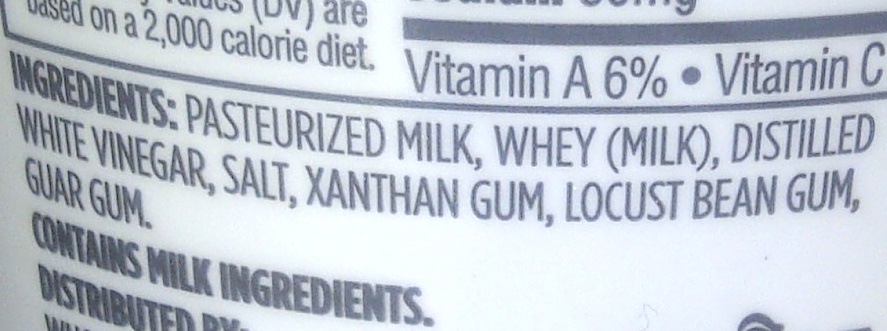
The gums allow food manufacturers to skip the draining process whilst churning out a ricotta cheese that seems creamy, but also tastes like nothing and curdles at the the mere quiver of heat. Plenty of blogs have discussed making ricotta from scratch so my recipe skimps on the details.
Chamomile Ricotta
Yields 40 percent cheese, 60 percent whey
(Recipe adapted from Michael Laiskonis, pastry chef & creative director of Institute of Culinary Education)
1800 gr whole milk (preferably pasteurized, non-homogenized)
250 heavy cream
36 gr dried chamomile flowers
125 gr apple cider vinegar
5 gr salt
- Combine milk and chamomile flowers and cold-infuse for 12 hours.
- Strain the infused milk mixture (adding more milk to restore it to 1800gr, if necessary). Add the cream to the milk and heat the mixture to 185 degrees Fahrenheit (85C).
- Remove the milk mixture from heat and stir in vinegar, stirring for 30 seconds as the curds begin to form.
- Add the salt, and continue stirring for 30 seconds.
- Cover and let the cheese stand for two hours.
- Drain the curds in a cheesecloth-lined chinois for 2 to 12 hours.
VARIATIONS:
- Use sheep or goat milk in place of the cow’s milk. They are expensive alternatives to cow’s milk but their creamy texture and sweet, nutty flavors will make the trouble worth it.
- The milk can be infused with any flavor of spice, tea, or herbs.
POINTERS FOR SUCCESS:
- Most milk sold in the United States is pasteurized, but if using raw milk, heat to 185 degrees Fahrenheit to deactivate the enzymes that would prevent from curds from forming.
- Avoid using UHT (Ultra High Temperature) pasteurized milk for cheese-making. The curds do not form well and the yield is poor (more whey than curds). Unfortunately milk is not required to be labeled as UHT-pasteurized, so you’ll have to learn through trial and error. It’s safe to say that store brands and most commercial brands (yes, even the organic brands) of milk are UHT. In the case of cheesemaking, it is best to buy milk from a local dairy as most of their websites provide detailed information about how the milk was processed.
- Although you can use lemon juice, vinegar gives the most consistent results.
 Buttery. Salted. Caramel.
Leave a comment