
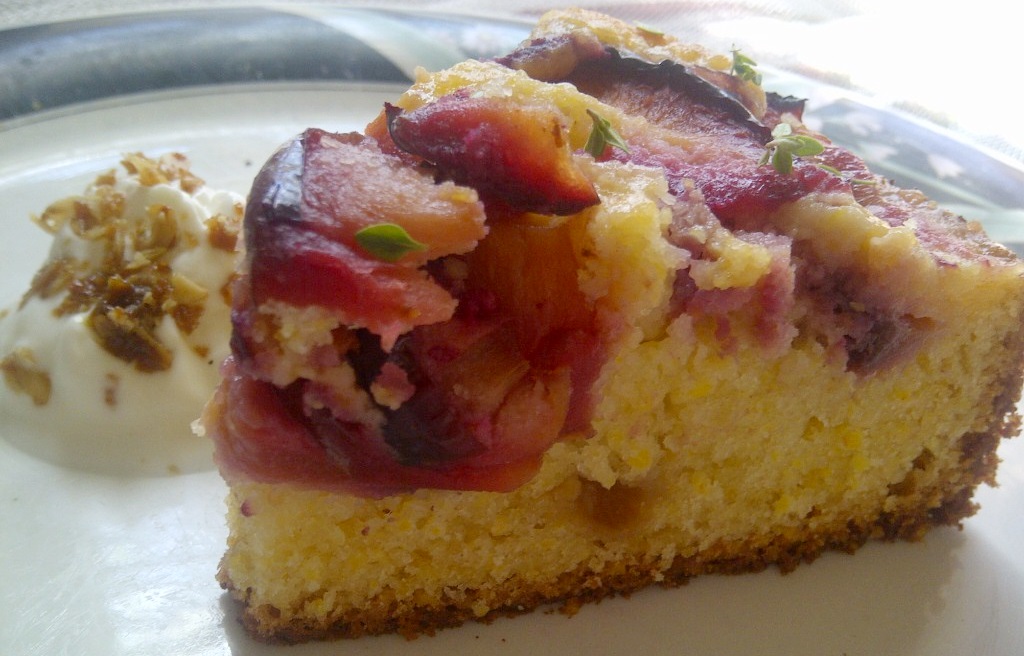
With the brisk chill of autumn approaching, our appetites crave hearty comfort food. It’s an awkward time for pastry as summer fruits drift slowly out of season but fall crops have yet to come to fruition. The nights may be chilly but the days are still too long for the cinnamon-scented warmth of pumpkin pie and apple strudel. So I turn to cake. Sadly, I’m not a fan of sponge cakes. Sponge cakes make great dance partners but they should not be left to tango alone. They pair well with mousses and fresh fruit but when eaten alone, I find them to be a little blah–eggy, a bit dry and lacking in substance. A good cake is one that can be eaten plain and unadorned. The icing and filling should almost feel like an intrusion on a cake that is rich enough to satisfy with a few bites. And of course, a good cake should pair well with coffee. This olive oil-polenta cake fits the bill on all counts.
Olive oil, polenta, and ricotta cheese are natural partners in any Italian meal, but you wouldn’t think of them as ingredients for a cake. But they make one of the best cakes I’ve eaten: moist, fruity and barely sweet. Quality counts: use extra-virgin olive oil, stone ground polenta (also known as ‘corn grits’) and whole-milk ricotta. Choose a bold extra-virgin olive oil as it will add a pungent fruitiness to the cake. The polenta is not in the cake just for crunch, but adds a distinct cornmeal flavor. The ricotta replaces some of the fat contributed by butter in a traditional cake recipe, so do not use low-fat varieties. The cake keeps well for a few days at room temperature and is barely sweet enough to do double duty as muffins or loaf cake. The batter also freezes well for up to 2 weeks.
Olive Oil-Polenta Cake
Makes two 9-inch cakes
18 oz. ricotta, whole-milk
6 oz. extra-virgin olive oil
13 oz. granulated sugar
2 ea. freshly grated citrus zest
7 oz. eggs
12 oz. all-purpose flour
5 oz. polenta, stone ground (“corn grits”)
10 gr baking powder
2 gr baking soda
5 gr. salt
12-16 Italian plums, pitted and quartered
Preheat your oven to 360° F, lightly grease two 9-inch cake pan with olive oil.
In a large mixing bowl, combine and whisk the ricotta, oil, sugar, zest and eggs.
Sift all of the dry ingredients on top of and fold into the ricotta mixture, mixing just until the last streaks of flour disappear.
Divide the batter between two cake pans. Spread the plums in a single, even layer on top of the cake. (If the fruit is not quite ripe, coat it lightly with olive oil and honey to prevent the fruit from turning into fruit chips after baking.) Bake the cake for 25-35 minutes, or until the top is golden brown and a cake tester comes out of the cake cleanly. Cool the cake in the pan for 10 minutes, then turn out to finish cooling on a rack.
Serve slightly warm or at room temperature with mascarpone, crème fraiche, or sorbet or enjoy with coffee for a mid-afternoon snack.
Variations:
Rhubarb-Rose Geranium: Infuse the sugar with 1/4 ounce of fresh rose geranium for 24 hours. Omit the plums and use 1lb. 4oz of rhubarb, peeled and cut into 1 inch chunks. Toss the rhubarb with a bit of olive oil and honey and layer on top of the cake before baking.
Fig: Add ½ oz. almond extract to the ricotta mixture. Replace the plums with 1lb. 4 oz of fresh figs, de-stemmed and halved.
Pointers for success:
- Coat the pan in olive oil—not cooking spray. This creates a deliciously crispy crust on the cake and keeps the crust tender after baking.
- Turn your oven fan off or to its lowest setting. This will prevent the fruit from dehydrating and keep the cake moist.
- Fill the pan halfway and spread the fruit evenly over the top of the cake. This cake will double in height and a thick cake will take longer to bake leading to a tough, crust and burnt fruit—a lesson I learned the hard way.
- If using conventional plums (black skin, yellow flesh), slice in ¼ -inch pieces, toss in olive oil and cinnamon sugar, and roast until juicy before topping the cake. If using the smaller, red-fleshed plums, then they can be quartered and baked raw on top of the cake.
 Buttery. Salted. Caramel.
Leave a comment