

The dessert was a corn semifreddo paired with polenta cake, popcorn shoots and blueberries. Halfway through service, one of the restaurant’s owners proclaimed that the dessert was disgusting and 86ed it for the rest of the night. The chef blamed the owner’s boorish behavior by explaining that he didn’t understand the concept of using savory ingredients in desserts, a reference to my occasional proclivity for using “savory” ingredients—such as corn, rhubarb, basil, juniper, fennel, peppercorns, bay leaf, and goat cheese—and making desserts that aren’t overtly sweet. Sugar is traditionally viewed as a dessert ingredient, but why not also view it as a flavor that balances or enhances the nuance of a bitter flavor. Why the shame in using sugar in a “savory” recipe? Why do we persist in categorizing food as “sweet” and “savory”? This dichotomy prevents us from seeing ‘food as flavor’ and isn’t flavor an integral part of cooking?

Perhaps the sweet/savory dichotomy persists because it’s one of the rules that helps us understand the world around us. Food is to be seasoned, usually with salt and pepper. Corn should be sweet, yet it is often disavowed as a savory ingredient that shouldn’t be used in desserts. (While most corn has been genetically modified to to meet consumers’ expectation of super-sweet corn, corn desserts have not gained as much widespread acceptance as bacon -inspired desserts.) Rhubarb, despite being a vegetable, is an ingredient for dessert but only to be used in pies. (The first time that I used rhubarb in a dessert, no one knew what it was until I mentioned strawberry-rhubarb pie.) Although tomatoes are fruits (botanically speaking), they belong in savory dishes. Desserts should be sweet and served at the end of the meal. Sweet foods like breakfast cereals, are not “dessert”, because they are never served at the end of the meal. Ice cream is “dessert” precisely because it is served at the end of a meal. (Therein lies the genius of cereal milk panna cotta and ice cream bread. They defy convention and definition.)
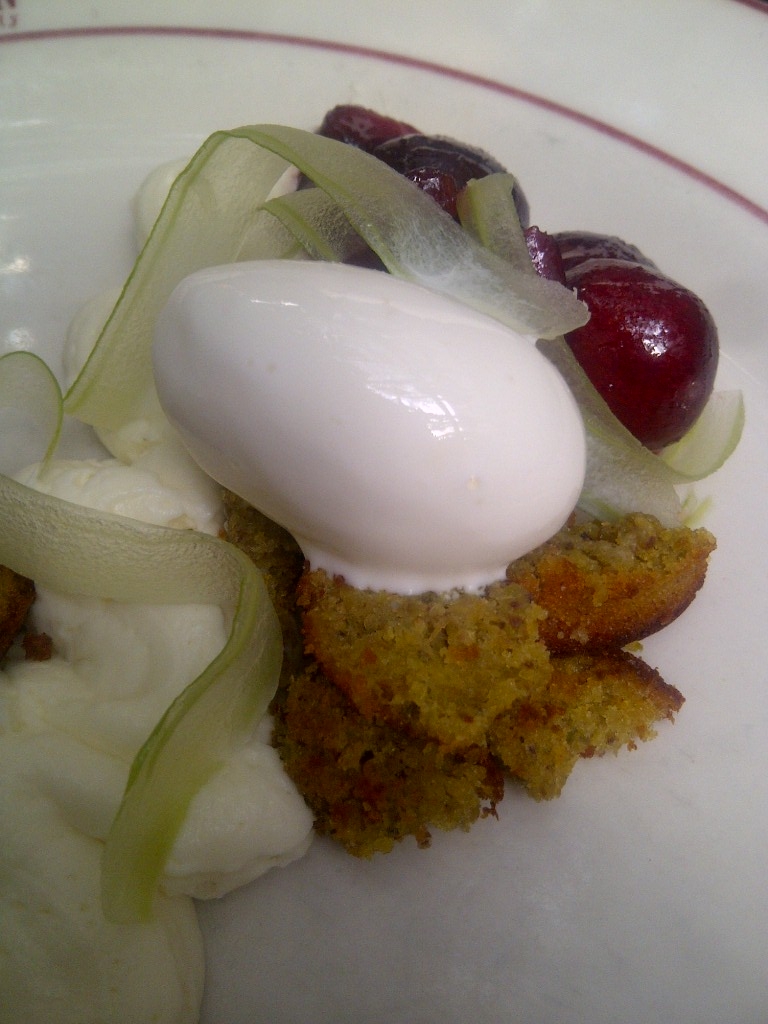
On occasion, we allow an ingredient to blur the line drawn between sweet and savory. Take the carrot, for example. Which would you prefer for dessert: carrot cake with cream cheese ice cream and maple-glazed walnuts, or carrot panna cotta, with maple-walnut brittle and cheesecake anglaise? Although it seems to blur the sweet/savory dichotomy, carrots come with their own rules: use them in desserts, so long as the carrots are in a cake. Bacon has had a more successful run at transgressing the sweet/savory dichotomy although it’s a uniquely American phenomenon that has more to do with rebellion than with changing our perception of food as “sweet” or “savory”.
Complicating matters, the context of which foods are “sweet” and “savory” varies across cultures. In America, waffles are served for breakfast and crepes are served for dessert; but in France, crepes are served for breakfast, lunch or a light dinner. Like the crepe, waffles are both a popular dessert course and snack food in Brussels. In America, waffles are for breakfast…and chicken. While Europeans have strict societal norms, they are less conservative about defining “sweet” and “savory” ingredients. Tomatoes are regularly featured as sorbets or dessert consommés during the summer months. Carrots move beyond cake and into sorbets and curds. Shiso, chervil and other salad greens are used, not to defy convention, but for their palate cleansing properties. Similarly, if I want a licorice note in my dessert, I don’t think only of star anise; I also reach for the fennel or tarragon. Each ingredient bears a unique flavor, so why not use them where they fit?

In an age where we are trending towards a locavore approach to cooking, it behooves us to move past the sweet/savory dichotomy of food. Otherwise, what dessert will you serve during the winter months when local fruit is out of season and imported fruit is prohibitively expensive (and usually of poor quality)? I’m not making the case for nonsensical pairings like foie gras with cotton candy or shrimp with caramel. But why not a parsnip panna cotta with hazelnut brittle? Or an olive-oil cake with elderflower sorbet and stone fruit compote? Or sweet potato beignets with almond ice cream? Or a chocolate-pear mousse torte and beet sorbet ? At the end of the day, there is only food. And food is flavor.
 Buttery. Salted. Caramel.
Leave a comment